It was early 2019 and I was in a bad situation medically. My weight was out of control and only getting worse. I needed to put a plan into motion immediately before it was too late. My doctor advised me to lose over a third of my body weight.
I have been overweight and obese my entire life, though a few times I have also been what people would consider skinny. In 2019 I was at my highest weight ever (342lbs) and it had been decades since I had felt anything close to healthy.
Weight loss programs always include goals and rewards. Everyone who wants to lose weight sets a weight loss goal. It’s a common unifying action that we all do, maybe it’s something the individual considers easily obtainable, maybe it’s a long shot that they have little chance of obtaining. Or maybe it falls somewhere in between.
My 2019 goal felt like it would have been impossible at twenty. How the hell was I going to do it just shy of fifty?
Sometimes in the past, I would give myself some kind of reward to shoot for when I would diet. This is a pretty common thing for people to do and the reward can be almost anything.
I’ve always found that the reward is best when it’s not food-related. With an unhealthy relationship to food like I had (and I am sure many others have) rewarding myself with food was something I did all the time.
I needed a reward that would mark the beginning of a shift away from using food as a reward.
I certainly believe that losing weight is a reward in and of itself, but I also believe that upping the stakes by setting an additional reward helps maintain focus in the long run. The destination weight becomes more of a measurement of my success than anything else. Reach the goal, get the reward. Simple.
I mentioned earlier the importance of setting a reward that doesn’t sabotage your efforts. Let me share an experience I had growing up to elaborate on why this can be dangerous.
When I was a child my mother had trouble with her weight and would diet frequently. The reward she chose was a social one that put her in a situation that could potentially jeopardize her efforts on a weekly basis.
I can recall attending the church support group she would go to a weekly meeting called T.O.P.S. — “Take Off Pounds Sensibly.” People would talk about their successes and failures and weigh in. The typical activities you might associate with a support group of this nature.
I was motivated to attend these meetings because after the meeting they would always reward themselves by going out to dinner at a local restaurant. They would give themselves this micro-reward on a weekly basis whether they gained or lost weight. Sometimes their meals were healthy, many times they were not.
And believe it or not, back then I can totally understand why they viewed those dinners as a reward. Unless it was a special occasion, people cooked and ate at the vast majority of meals at home. Going to a restaurant was considered a reward. Even something as mundane today as going to McDonald’s was considered a treat.
But using food as a reward for people struggling with their weight seems somewhat counter-intuitive. The opportunity to self-sabotage the weight loss effort is a very real possibility. If possible the reward should be something that won’t sabotage the intended effort.
For some people, the reward they seek it to regain an ability that their weight gain has taken away from them. Clothing is a popular reward. Many overweight people have closets full of clothing that don’t fit anymore. Clothing holds memories, and being able to wear something again that is tied to a memory can be a powerful motivator.
I had a whole closet full of clothes that I couldn’t wear. Brand new shirts with the tags still on them that I got as presents which never fit. But clothes have never had the appeal for me that they do to others. I saw those clothes more as reminders of my own weight failure.
Sometimes the reward is health-related. Weight gain causes havoc for many people’s health and the threat of future medical issues can be a strong motivator to lose weight. Doctors will tell people that losing weight will help improve weight-related tests such as blood sugar and cholesterol back toward the normal range.
My health was clearly suffering in many ways. But I have always been tall which has helped me to hide my weight visually. Eventually, I reached a weight where even my height couldn’t help. When it came to my bloodwork, there was no fooling my doctor.
And sometimes the reward is just something the person wants. Simple and to the point, the classic material reward works. Just ask any kid that was promised money for every “A” they got in school if it was a motivator to succeed and they will readily agree.
This was the route I went for my secondary goal. I wanted adventure, and there was only one way to get it.
As I mentioned earlier in March of 2019, I was at my highest weight ever. I weighed 342 lbs. I was almost 50 and my weight and health were spiraling out of control. I was uncomfortable, always hot, always out of breath, and always hungry. I had high blood pressure, cholesterol, and blood sugar.
A daily cocktail of pills twice a day barely kept some of these issues at bay, some not at all. I had run out of my prescriptions and gone in for the bloodwork that my doctor forced me to do to get a refill.
His office looked the exact same as it had the last time I was there. Same decor, same magazines and I was anticipating I would hear the same things he had told me the last time I was in to get my prescriptions refilled. I had no idea of the verbal slap in the face that was coming.

I wish I could say that he yelled, but he is one of the most unflappably calm people I have ever met. I wish I could say that he had a disgusted look on his face, but he is professional to his core.
On that day, I would learn that it was my third consecutive blood sugar (A1C) test with a value of over 9.5 (a typical normal A1C value is less than 5.7). According to the CDC, an A1C value over 6.5 is considered to be full-blown diabetes.
I’ll never forget what he told me that day:
“I can’t increase the dosage for your A1C prescriptions any more, you either need to make some lifestyle changes and lose some weight or we are going to have to consider going to insulin injections.”
I was stunned. This was my lightning bolt moment. To be perfectly frank it scared and shocked me to my core.
I had to change. In my mind I was one step away from being on insulin for the rest of my life, losing a body part to diabetes or even death. The threat of insulin made it all too real.
A few years earlier I had some success losing weight with a low-carb diet. I stammered that I was going to go back on paleo or maybe keto. I promised him that I would make the changes I needed and start dieting. How many times had he heard similar promises? I can only imagine.
The thing is when you are looking at having to lose a large amount of weight to get back to a healthy place like I was, the chances of success can feel pretty grim. And for good reason. According to this Reuter’s article posted back in 2015 (link):
“Researchers followed 76,704 obese men and 99,791 obese women for up to nine years. In any given year during the study, the probability that a patient might achieve a normal body weight was 1 in 210 for men and 1 in 124 for women.
For those who were severely obese, the annual odds stretched to 1 in 1,290 for men and 1 in 677 for women.”
With these kinds of odds, I needed something to keep me focused, to keep me going over what I knew was going to be a long haul to reach my goal weight. That day I set the first of two goals.
First and foremost, I had to get my blood sugar down. To me, this seemed to be the easiest piece of the puzzle to solve since it was mainly tied to what I was eating.
My eating habits were horrible. Eat half a pizza for lunch from a food truck three days a week at work? Sure, why not. Hungry before bed? How about a few bowls of ultra-sugary cereal? Feel like eating it with chocolate milk? Works for me.
Looking back I cringe at what I would eat and in what quantities. I knew it was bad, but I didn’t really fully understand how completely bonkers it was until I started tracking my food each day. And let’s be honest, eating food in large quantities made me feel good.
This time around I decided to go down the keto diet route. With my previous success on paleo, I figured keto would work even better (a daily net carb goal of 20g per day. For reference, an apple has about 26g net carbs). What I wasn’t prepared for was how much harder it would be.
But I was running scared, and fear can be an effective motivator. The first month on keto was pure hell, but I managed to stay on track and keep going. At this point, all I was doing was walking with my dog but I was starting to lose some weight. I was miserable but I kept thinking about insulin and was able to gut through the first three months.
After three months, I went back in to see my doctor for another round of blood work. New advancements in my medical group’s iPhone app had given me the results early and I was beyond excited.
“Well, I thought the lab made an error until I saw you,” was the first thing my doctor said as he walked in the door. Shockingly, my A1C blood sugar and triglycerides were now firmly in the normal range. I don’t know who was more surprised, but my doctors urged me to continue what I was doing.
I wish I could say that I was in the clear, but the reality was that I was still taking two high dose blood sugar and cholesterol and hypertension prescriptions. But the diet change had made it so the medication could actually help me.
I was still morbidly obese but that early success meant everything. So I kept taking it day by day, focusing all my efforts into making good choices and getting some exercise. But I knew I needed something more.
When I first started back on keto I had thought about how much I always wanted to get into backpacking. At the time I pushed the thought away, I had more important things to focus on like getting my blood sugar under control.
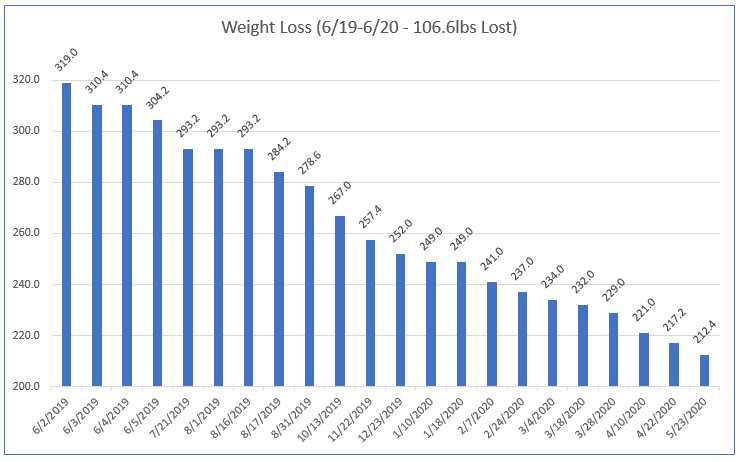
By now, it was June 2019, I weighed 319 pounds and I didn’t look much different than I did at 342. According to my doctor, the upper end of normal weight for my age was 190 pounds. But at least my blood sugar was looking better.
Around this time, I stumbled across a YouTube video about Isle Royale National Park. I had never heard of it, but it looked like an amazing place to go for a backpacking trip.
I began to think that maybe I could go backpacking there if I could just keep up my efforts and continued to lose weight. It was then that I set my long-term goal to backpack at Isle Royale when I reached my goal weight.
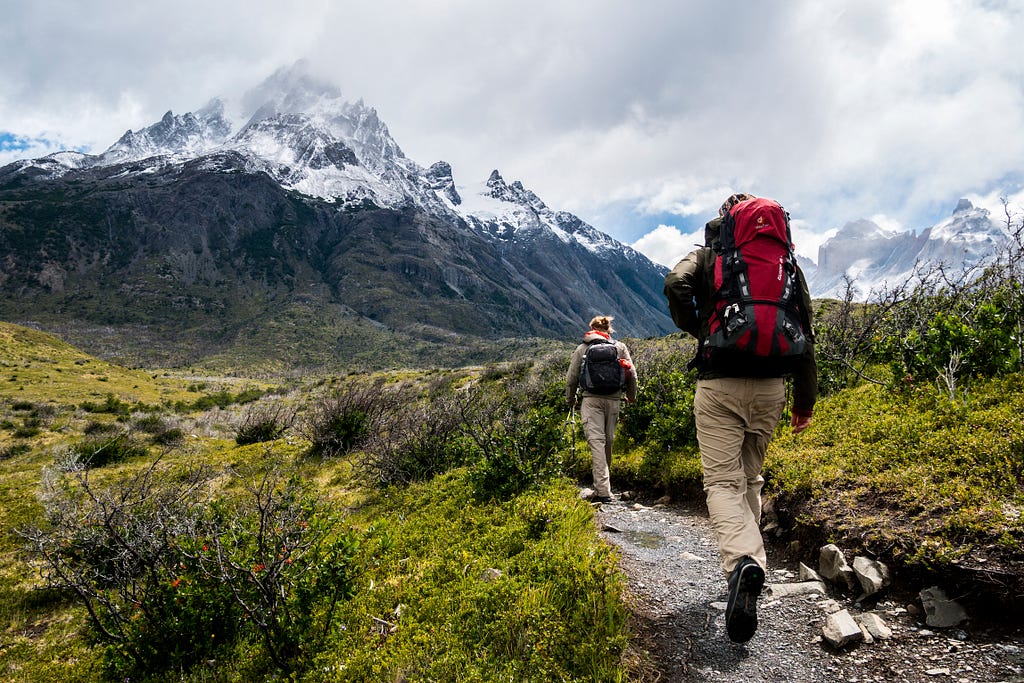
As someone that loves the outdoors, I have always enjoyed car camping (where you haul all of your gear in a car) with my family or as an adult scout leader with my son’s Cub Scout Pack and eventually his Boy Scout Troop. But I never made the jump into true backpack camping. This was due to two primary reasons.
The first reason was my weight. At my weight, hiking was difficult for me to do, but doable when the terrain was predominantly flat. Add in any amount of elevation or heat and hiking quickly became a miserable experience.
I knew there would be no way I could haul a heavy backpack with all of my gear and food at my weight. And while I know some people backpack while overweight without issue, I knew I couldn’t be one of those people.
The second reason was finding gear that fits. At my size, finding gear that would work for my dimensions was challenging and expensive.
As someone with huge feet, I am used to having limited choices. When it came to backpacking gear I was finding that my size reduced my options in many areas significantly. If I could lose the weight and get to my goal, both of these problems would be solved.
With just shy of 120 pounds to go, I had plenty of time to research and prepare the trip I wanted to take. It also gave me something to look forward to and learn about to keep my mind off how far I had to go to reach my goal.
Reddit and YouTube became endless sources of data to consider and ingest. The more videos of Isle Royale I watched, and threads about backpacking I read, the more I could start to visualize myself walking those trails.
By now, another three months had gone by, it was the beginning of September 2019 and I was once again back at my doctor’s office. My weight was now 278.8 lbs and I was starting to feel better, and according to others look better (I still couldn’t see it).
The keto diet was still going strong and my daily walks had increased to three miles a day. My A1C blood sugar was down to 4.8 but I was starting to feel very light-headed often. It was time to lose some prescriptions that I no longer needed which quickly resolved the lightheadedness.
My doctor began showing some real excitement and dare I say he was starting to believe that I might actually claw my way back to a healthy weight. He was excited in the measured way that doctors are and reminded me to be back in three months for more blood work.
It was around this time that I decided to get back into running. With a son in cross-country and track, I had spent a lot of time watching his and the team’s running improve from beginners to becoming state qualifiers.

Seeing what the accomplished gave me the motivation to try and get back into running myself. Since I was already walking three miles a day I decided to slowly start adding some jogging to the beginning of my walk.
I would jog a quarter-mile and walk the remaining 2.75 miles. Over the next few months, I slowly progressed to the point where I could jog the entire three miles at a pace appropriate for my level of fitness.
When the weather started getting cold and I moved my running indoors to a treadmill. This was good because it kept me running, but it most likely negatively impacted my overall running fitness (treadmills are easier than running outdoors).
But I was burning calories which was the important thing, and the treadmill would only last until the beginning of January when it suddenly died. While I complained about its death my wife calmly pointed out that it was seventeen years old, it had a good run. So I moved my running back outside despite it being January.
Before I knew it, I had reached my first anniversary from that fateful day in my doctor’s office. As we all know 2020 has been a crazy time for us all. Things got (and largely remain) crazy, but being forced to work from home mean less time commuting. Which meant I had more time after work to go for walks/hikes and runs.
My keto-based diet continued largely the same as it did in the beginning with a few lapses here and there (you can’t beat yourself up too much for the occasional slip), but by now my views of food had taken a radical change from where it had been a year before.
As corny as it sounds to say, I no longer lived to eat but ate to live. I found myself much more aware of how much carbs and sugar everything has from actively tracking in a carb manager application my daily food.
If there is one bit of advice you take away from this article let it be to track your food if for the only reason to learn more about how much carbs and sugar things have in them. This really can help you adjust how you view food.
It was June 2020, and I weighed in at 212.4 lbs, I was down 106.6 lbs down from my first post-keto diet blood work measurement the previous year, and down 129.6 lbs from where I started (342lbs).
I am now just shy of weighing 200 lbs. Running has become a daily part of my life and I have been running distances that I could never have imagined when I started this journey. To say this experience has changed my life would be an understatement.
If you made it this far, I am sure you are dying to know the answer to this question. Sadly the answer to this question is: Not Yet. With COVID-19, Isle Royale shut down for several months only to re-open in a limited fashion, and only then to more expensive chartered seaplanes (which I can’t afford).
The ferries that most people ride to Isle Royale will not be in service until at least the 2021 season, so I am targeting 2021 for my trip. Rest assured that I will post a follow-up about Isle Royale once I make it there.
I hope that this story will help motivate you to start your own weight loss journey if you find yourself having to start your weight loss journey. I hope my experience can serve as a boost to those of you who are already on the path toward your goal.
It’s not an easy path, and it can seem like you will never make it at times, or that what you are doing isn’t having any impact on your life. Let me tell you that it does, you just can’t see it yet.
Take photos along the way, it’s hard to ignore your success when you are looking at where you started and where you are now.
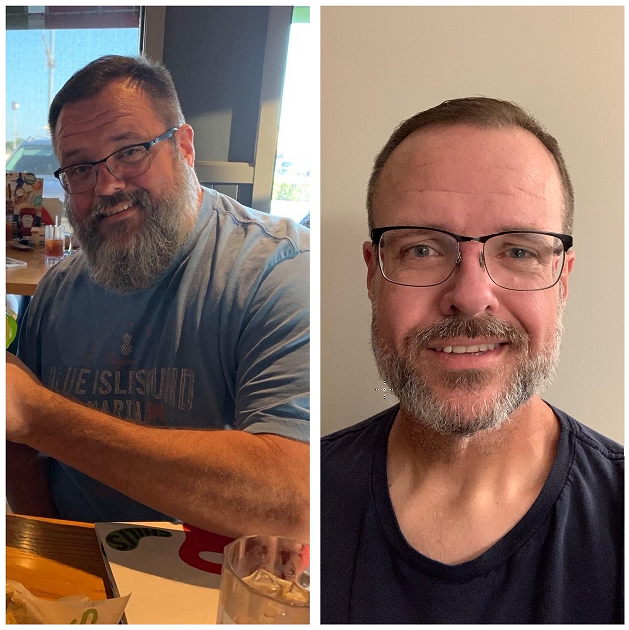
Weight loss is really like eating an elephant. How do you do it? One bite at a time. Small steps lead to big accomplishments. Thanks for reading.
<hr><p>Keeping Your Motivation When You Need to Lose Over 100 Pounds was originally published in Better Humans on Medium, where people are continuing the conversation by highlighting and responding to this story.</p>